
Simple Ductless Mini Split Installation in Clanton, AL
Some rooms just don’t cooperate with a home’s existing ductwork. A converted garage, a new addition, or a bonus room over the carport often ends up too far from the main system to heat or cool evenly, no matter how the vents get adjusted. A ductless mini split solves that problem directly, delivering heating and cooling to a specific space without tying into the ductwork at all.
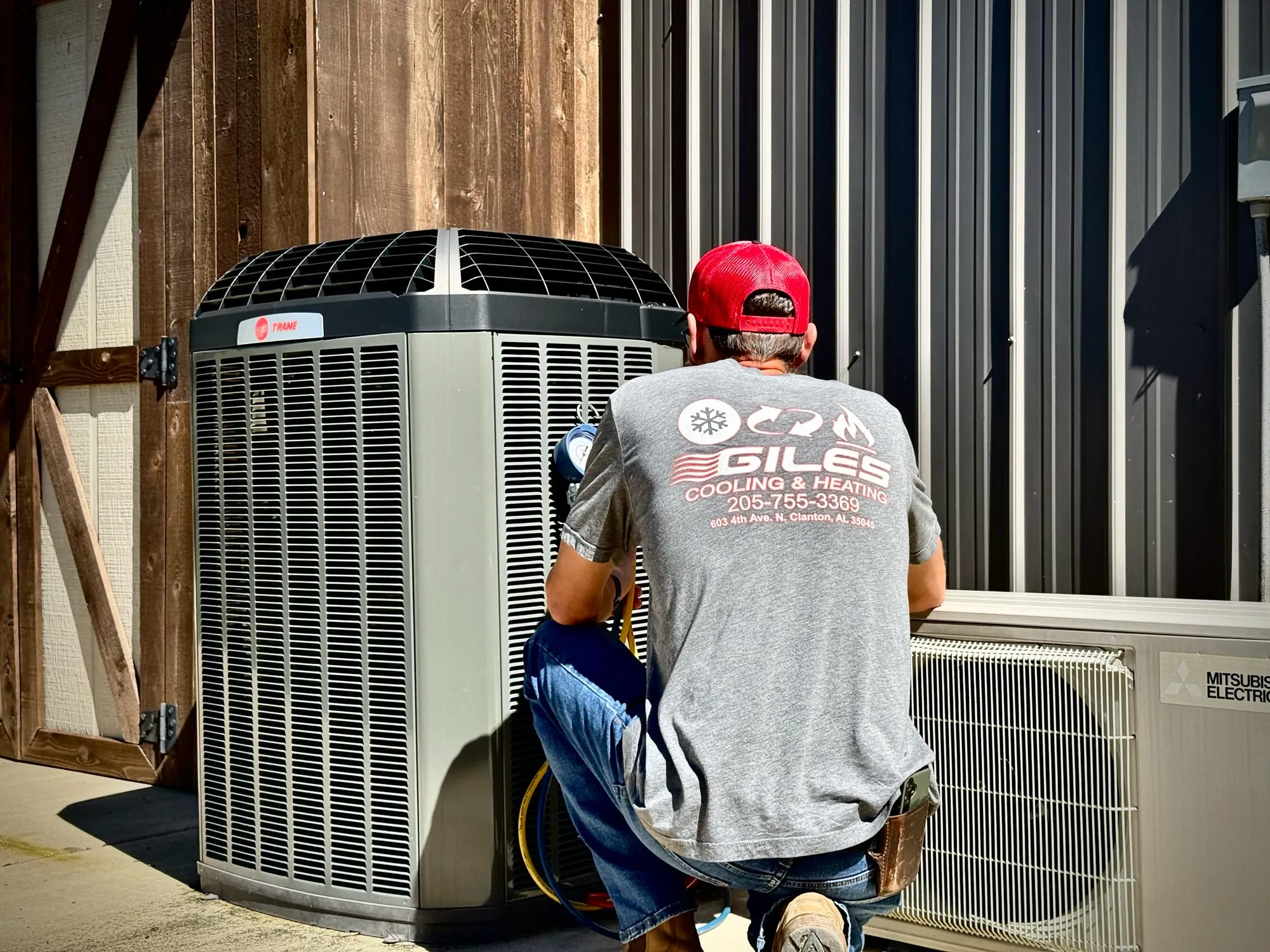
Each system pairs an outdoor unit with one or more indoor units mounted directly in the room they serve. That setup gives homeowners zoned control over temperature in spaces that would otherwise stay too hot in summer or too cold in winter, regardless of what the rest of the house is set to. We carry high-quality brands you recognize, like Trane and Mitsubishi, for long-lasting comfort, year-round.
Talk to a Giles Technician About a Ductless Install
Where a Ductless Mini Split Makes the Most Sense
Ductless systems tend to work best in spaces that sit outside the reach of a home’s central heating and cooling. Common situations where a mini split is worth considering include:
If one of these describes a room in your home, a mini split may be worth a closer look during an estimate.
Reach out online or call our team, and a technician can walk you through whether a ductless mini split makes sense for your room, addition, or renovation project.
How Ductless Heating and Cooling Works
A mini split moves heat rather than burning fuel or relying on ducted airflow to do the work. Refrigerant lines run between the outdoor compressor and the indoor unit, allowing the system to pull heat out of a room in the summer and bring it in during the winter. Because there’s no ductwork involved, there’s no energy lost through leaky or poorly insulated duct runs either.
Each indoor unit can typically be controlled on its own, which means a homeowner can set one room warmer or cooler than the rest of the house without affecting anything else. For a single room or small addition, that kind of independent control is something a central system simply can’t offer.
What Homeowners Love About Our HVAC Services
Ductless Mini Split Questions From Central Alabama Homeowners
A few questions come up often when homeowners consider a ductless system, so we’ve answered some of the most common ones below.
It depends on the project, but in many cases, yes. Extending ductwork into a new addition or converted space often involves more labor and construction than mounting a ductless system, especially in homes where running new ducts isn’t straightforward. Our technicians can compare both options during an estimate.
It depends on the setup. Some systems support a single indoor unit for one room, while others connect multiple indoor units to a single outdoor compressor, allowing several rooms or zones to run independently. The right configuration depends on the space and how it’s used. Contact us today to schedule an estimate for your property.
Like any HVAC system, ductless mini splits will require maintenance, but it’s fairly straightforward. Filters need regular cleaning, and the system benefits from the same kind of seasonal check that traditional HVAC equipment gets. Skipping maintenance can lead to reduced efficiency over time, the same as it would with a ducted system.
For most homes, a mini split is better suited to specific rooms or additions rather than replacing a full home system. It’s worth discussing your particular layout with a technician, since the right answer depends on square footage, existing ductwork, and how your home is laid out.
Indoor units tend to run quietly, and much of the operating sound comes from the outdoor unit. Placement matters for how noticeable that sound is, so it’s worth mentioning to your technician if a quiet installation is a priority for your space.
They’re closely related. A ductless mini split uses heat pump technology, moving heat rather than burning fuel to warm or cool a space, but it does so without any ducts involved.
A traditional heat pump typically connects to a home’s existing ductwork to condition the whole house, while a mini split delivers that same heating and cooling directly to one room or zone. Both approaches rely on the same underlying process, just applied differently depending on the space.

Comfort Without the Ductwork Hassle
Not every room in a home cools or heats evenly, and not every space needs a full ductwork extension to fix it. A ductless mini split gives you targeted comfort exactly where you need it, without reworking your entire system.
Reach out online or call our team to find out if a ductless setup makes sense for your home.